
any offensives in Russia in 1943."
I've taken the past couple of months off from this blog, just for the summer. My kids have been out of school, we traveled a bit, and I've been working like crazy on my new novel, so the blog has been neglected. This week the young Thompsons go back to school, and for all practical purposes summer will end. Before resuming the roll-call of my past novels, I thought I'd take a moment to describe my summer reading.
"Summer reading" is a thing, of course. Bookstores promote the concept, even marketing titles as "perfect summer fare," "just right for the beach," etc. I read the year round, constantly, but I happened to have scored a rich harvest of interesting books this summer. Because of the confluence of several anniversaries--my birthday, my wedding anniversary, Fathers' Day--I often reap the benefits in June. This year I've continued to find good stuff serendipitously, in thrift stores and library book sales, for example.
About the title; having a book-filled summer just cried out for a new descriptive term. "Bookish" doesn't fit. I am always bookish, and it implies behavior rather than a condition. "Bookly" popped into my head as a facetious new adverb to describe the state of having acquired many new books. A library sale is a bookly event. So's a birthday, in my case.
June 2018:

How Did It Begin? by Dr. R & L. Brasch. Hardcover. New York: MJF Books, 2014. 328 pp. ISBN 978-1-60671-271-9
My children gave me this book for my birthday. We were in Quebec City that day, and after devouring the last cake available from the patisserie around the corner, I unwrapped this. This highly readable book describes the origins of many common items, beliefs, and practices. Why do lapels have notches or slits? Why do we say "raining cats and dogs?" Who was the real McCoy? The authors (a United Nations Peace Prize winner, rabbi, and former researcher for Encyclopedia Britannica) supply answers, presumed answers, and folk wisdom to answer these and scores of other points of origin.
Good stuff. A perfect bathroom book, as it consists of short essays rather than lengthy chapters on each topic.
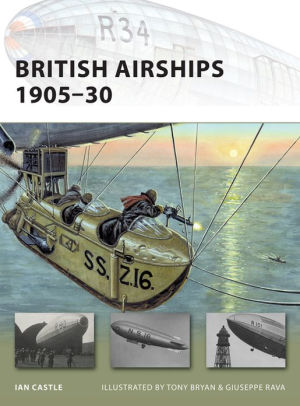
British Airships 1905-30, by Ian Castle. Trade paper. Oxford, UK: Osprey Publishing, 2009. 48 pp. ISBN 978-1-84603-387-2
Another birthday gift, this time from my wife. I love Osprey Books. They're lavishly illustrated, well-written, erudite booklets on all aspects of military and technological history--airplanes, tanks, uniforms, battles, campaigns, and yes, airships, from all eras of history from ancient times to yesterday.
Regarding airship technology, the British played catch-up for this entire period, trying to match or exceed German progress with Zeppelins. During World War I they extemporized a whole series of small coastal blimps for anti-submarine duties by suspending airplane fuselages under cigar shaped envelopes. These A/S blimps did yeoman service. The British had less success with their rigid (Zeppelin type) airships. Though some, like R-80 and R-100, designed by Sir Barnes Wallis, were successful, most performed poorly and a couple crashed with heavy loss of life. Oddly enough, a forgotten British airship, R-34, completed the first non-stop crossing of the Atlantic, in both directions, in 1919. That's eight years before Lindbergh flew one way, non-stop.
Barnes Wallis, by the way, has long been one of my heroes. A great man.
Another excellent Osprey title. Not as detailed as the studies of Douglas Robinson, but a great introduction to the subject, and it's replete with many photos and illustrations.
While we're on the subject of airships:

The Zeppelin in Combat, by Douglas H. Robinson. Hardcover, Atglen, PA: Schiffer Publishing Ltd., 1994. 410 pp. ISBN 0-88740-510-X
My anniversary present. Let me be clear: this is a magnificent book! The original edition of Robinson's study of World War I German airships was published in 1962. This 1994 edition is a large format coffee table book, mating Robinson's authoritative text to a large collection of original photographs. The author covers every theater where Zeppelins were employed, Imperial Army and Navy ships, early civilian Zeppelins, Schutte-Lanz airships, their construction and the men who flew them. Allied countermeasures are covered as well. The technology of rigid dirigibles is frankly amazing. Did you know Schutte-Lanz airships' frames were made of plywood? Or that a 1916 Zeppelin could fly 1,500 miles, carrying (typically) 4,000 pounds of bombs, plus a full crew? Of course their top speed was around 50-60 MPH, but airplanes in those days could barely manage 80-90 MPH, and their bomb loads were often less than 100 pounds.
If you read only one book on this subject, let it be this one.
My last birthday present tied-in with our vacation to Canada:

Quebec, 1759 The Siege and the Battle, by C. P. Stacey. Trade paper, Montmagny, Quebec: Robin Brass Studio, 2006. 294 pp. ISBN 978-1-896941-738.
This book is widely considered the best account of the British capture of Quebec City in 1759. Author Charles Perry Stacey was not only a Princeton graduate and scholar, he was also a serving officer in the Canadian Army. This monograph, first published in 1959, refutes many of the romantic notions about the Quebec campaign. I learned a lot reading this book; for example, though General James Wolfe is regarded by the British as an eccentric military genius who died at the threshold of victory, much of the real credit for the conquest of Quebec goes to Admiral Charles Saunders, who navigated several heavy warships up the St. Lawrence River to close the waterway and land British troops and artillery below the city. This coup caught the French completely by surprise. From that point Quebec was doomed. Wolfe made several tactical mistakes in the ensuing campaign, but his army's nighttime climb to the Plains of Abraham brought about his famous victory.
Stacey writes well, serious enough for academic study, but with the acuteness of a military man. I highly recommend this book.
July 2018:

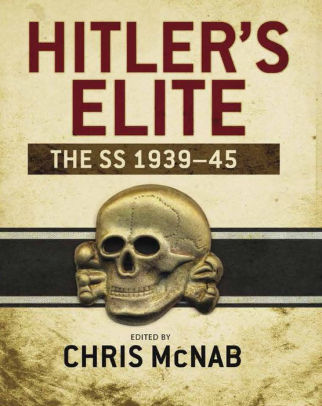
Though I bought these books separately, they're obviously a set, so I'll discuss them together.
Hitler's Armies, edited by Chris McNab. Oxford, UK: Osprey Books, 2015. 424 pp. ISBN 978-1-4728-1533-0.
Hitler's Elite, edited by Chris McNab. Oxford, UK: Osprey Books, 2015, 384 pp. ISBN 978-1-4728-1552-1.
Osprey strikes again! These books are compilations put together from individual Osprey booklets. Very high quality productions, heavyweight glossy paper, original paintings by Osprey artists detailing uniforms, weapons, etc.
Hitler's Armies is a history of the German Army, obviously. There doesn't seem to be comparable volumes on the Luftwaffe or Kriegsmarine yet (take the hint, Osprey!) Because of the publisher's focus on military details, the book is detail oriented; the reader gets insight on topics like the parachutes used by the Fallschirmjager. (Why did they jump head first out of airplanes?) The origin and development of camouflage battledress (first made for the Waffen SS), details of equipment and other minutia. If this sounds too specialized for the average reader, it's not. The book is so well illustrated and accessible it never feels bogged down in too much detail. Wargamers and re-enactors will love these books. I don't follow either hobby, I just delight in rich details and abundant information.
Hitler's Elite is an illustrated history of the Waffen SS, the armed contingent of Hitler's elite guard, the Schutzstaffeln ("Protection Squads"). The origins and crimes of the SS have been well documented, but there exists a body of literature in German and English (maybe other languages too) advocating the thesis that the Waffen SS were not criminal participants in the Holocaust and other atrocities committed on every front where German forces were engaged but North Africa. Waffen SS apologists like to claim they were "soldiers like any others," and that their formations were progenitors of the Pan-European armies of NATO. This is nonsense of course. Aside from actual battlefield war crimes (Oradour, Malmedy, Le Paradis, et. al.) it is plain from German records that there was a steady circulation of personnel and officers in and out of the battle formations into mass-murder squads and the concentration camp system.
Hitler's Elite is not one these apologetic books. The book's focus is on the usual Osprey interests--uniforms, insignia, weapons. While the historical outline is quite good, this book would mainly appeal to the collectors of militaria, wargamers, and re-enactors.
A modest but interesting detail I learned from these books: The SS's skull insignia became infamous both due to their ferocity in combat and for their crimes against humanity. The German Army also used a totenkopf (death's head) insignia as the symbol of their Panzer (tank) corps. The death's head has historical significance for the German military far predating the Nazi era. Various light cavalry regiments used a skull and cross bones emblem (on black uniforms, no less) back to Napoleon's era and earlier. For comparison:
 The SS death's head. Notice the skull has the jaw attached.
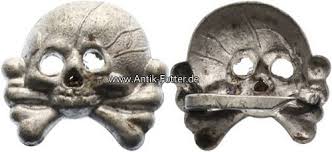 German Army panzer insignia (front and back): more bones, jawless skull.
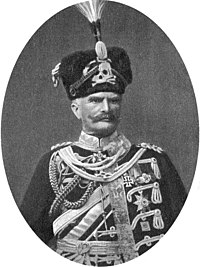 Field Marshal von Mackensen, circa 1914, with a really big death's head on his busby.
 British death's head: insignia of the 17th Lancers.

Barnes & Noble has these books for $12.98 each, a steal.
August 2018:
Hitler's Armies, edited by Chris McNab. Oxford, UK: Osprey Books, 2015. 424 pp. ISBN 978-1-4728-1533-0.
Hitler's Elite, edited by Chris McNab. Oxford, UK: Osprey Books, 2015, 384 pp. ISBN 978-1-4728-1552-1.
Osprey strikes again! These books are compilations put together from individual Osprey booklets. Very high quality productions, heavyweight glossy paper, original paintings by Osprey artists detailing uniforms, weapons, etc.
Hitler's Armies is a history of the German Army, obviously. There doesn't seem to be comparable volumes on the Luftwaffe or Kriegsmarine yet (take the hint, Osprey!) Because of the publisher's focus on military details, the book is detail oriented; the reader gets insight on topics like the parachutes used by the Fallschirmjager. (Why did they jump head first out of airplanes?) The origin and development of camouflage battledress (first made for the Waffen SS), details of equipment and other minutia. If this sounds too specialized for the average reader, it's not. The book is so well illustrated and accessible it never feels bogged down in too much detail. Wargamers and re-enactors will love these books. I don't follow either hobby, I just delight in rich details and abundant information.
Hitler's Elite is an illustrated history of the Waffen SS, the armed contingent of Hitler's elite guard, the Schutzstaffeln ("Protection Squads"). The origins and crimes of the SS have been well documented, but there exists a body of literature in German and English (maybe other languages too) advocating the thesis that the Waffen SS were not criminal participants in the Holocaust and other atrocities committed on every front where German forces were engaged but North Africa. Waffen SS apologists like to claim they were "soldiers like any others," and that their formations were progenitors of the Pan-European armies of NATO. This is nonsense of course. Aside from actual battlefield war crimes (Oradour, Malmedy, Le Paradis, et. al.) it is plain from German records that there was a steady circulation of personnel and officers in and out of the battle formations into mass-murder squads and the concentration camp system.
Hitler's Elite is not one these apologetic books. The book's focus is on the usual Osprey interests--uniforms, insignia, weapons. While the historical outline is quite good, this book would mainly appeal to the collectors of militaria, wargamers, and re-enactors.
A modest but interesting detail I learned from these books: The SS's skull insignia became infamous both due to their ferocity in combat and for their crimes against humanity. The German Army also used a totenkopf (death's head) insignia as the symbol of their Panzer (tank) corps. The death's head has historical significance for the German military far predating the Nazi era. Various light cavalry regiments used a skull and cross bones emblem (on black uniforms, no less) back to Napoleon's era and earlier. For comparison:
The flag of English pirate Edward England, circa 1718.
Barnes & Noble has these books for $12.98 each, a steal.
August 2018:
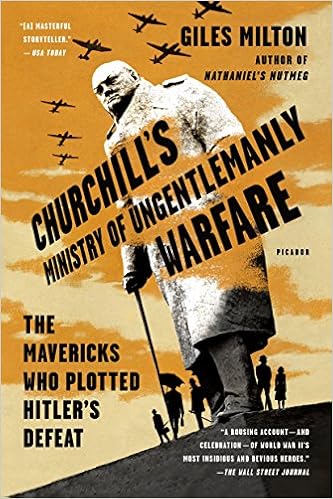
Churchill's Ministry of Ungentlemanly Warfare, by Giles Milton. Hardcover, New York: Picador Books, 2017. 356 pp. ISBN 978-1-250-11902-5. (First published in the UK in 2016.)
Giles Milton has written a number of popular books about the byways of history, the strange backwaters that precede or follow great events. He's very good at finding the personalities behind the public images of heroes and villains. In Churchill's Ministry, he chronicles the origins and growth of Britain's campaign of sabotage, assassination, and every sort of clandestine mayhem against Nazi Germany. I am familiar with large portions of this story, having grown up reading books like Gerald Pawle's Secret Weapons of World War II and Janusz Piekalkiwicz's Secret Agents, Spies, and Saboteurs. What Gilman offers beyond these previous accounts are detailed glimpses at the eccentric military men, and even more eccentric inventors who constantly dreamed up new ways to torment the Nazi occupiers of Europe. In a weird way, you almost (almost) feel sorry for the Germans having to deal with the fiendish and bizarre devices the British dreamed up to defeat them. Tanks and planes and warships are known facets of warfare, but hold on to your credulity as you read Gilman's description of sticky bombs, magnetic limpets, sideways shooting mortars, mines of every description, poisons, silenced pistols that fit in a rolled-up newspaper, silent time pencils for detonating infernal machines . . . let us all be glad these fellows were on our side.
It's worth remembering that when German Army officers plotted to kill Hitler, the closest they came was on July 20, 1944, when a briefcase loaded with explosive detonated in Hitler's forest headquarters. He escaped death by sheer chance, but the bomb did explode--thanks to a British silent detonator captured by the Germans!
This book is decorated with such characters as "the Deacon," a hand to hand fighting expert who resembled a benign clergyman, or the lecturer who started classes in sabotage by setting the timer on a bomb on his lectern and announcing, "This will go off in five minutes." It was a real bomb, too. The same man's profession in civilian life? He designed and built camper trailers, what the British call caravans.
It's worth remembering that when German Army officers plotted to kill Hitler, the closest they came was on July 20, 1944, when a briefcase loaded with explosive detonated in Hitler's forest headquarters. He escaped death by sheer chance, but the bomb did explode--thanks to a British silent detonator captured by the Germans!
This book is decorated with such characters as "the Deacon," a hand to hand fighting expert who resembled a benign clergyman, or the lecturer who started classes in sabotage by setting the timer on a bomb on his lectern and announcing, "This will go off in five minutes." It was a real bomb, too. The same man's profession in civilian life? He designed and built camper trailers, what the British call caravans.
Forget James Bond or Mission: Impossible. These guys were the real deal.
I got this book, in brand new condition, from a local PTA Thrift shop for $1.00.

Requiem for Battleship Yamato, by Yoshida Mitsuru. Hardcover. London: Constable and Co., 1999. First published in English, 1985. 152 pp. ISBN 0-09-479780-3.
This book was a totally random find. The local branch of the Durham County Library system keeps a shelf of donated books for sale to patrons. I found this mint copy, paying $3.00 for it.
Yoshida Mitsuru was a young naval officer, only 22 years old when he served aboard Japan's last, biggest battleship, the IJN Yamato, in 1945.
(I am still reading this book and will update on it later. First impression: a very romantic, lost-cause memoir of a youthful naval officer.)
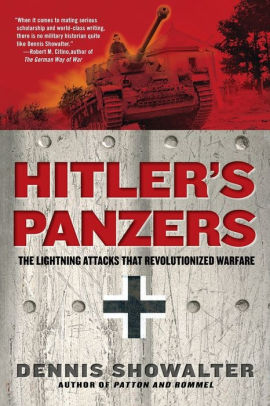
Hitler's Panzers, by Dennis Showalter. Hardcover. New York: Berkley Caliber, 2009. 390 pp. ISBN 978-0-425-23004-6.
My last summer aquisition I found in a small used book shop in Pittsboro, N.C. for all of $6.00.
Dennis Showalter is a military historian specializing in the period from Napoleon to the end of World War II. His particular area of expertise is Germany.
Hitler's Panzers describes the development of the German Army's tank forces, from the days of Weimar's plywood simulated vehicles to the iconic Tigers and Panthers at the war's end. Tank warfare evolved between the wars in many countries, with the purest form of all-tank campaigning being promulgated in the Soviet Union. In Germany, tanks were seen not only a force multiplier, but a weapons system by which outnumbered German divisions could redress the balance of power in their favor. The result of these experiments, trials, and theorization was the panzer division of World War II, an all-arms organization capable of striking, paralyzing, and crushing enemy formations.

Germany, 1928: Simulated tanks on bicycle frames
Yet it was not always as the legends say. French tanks in 1940 were better, machine to machine, than their opposite German numbers. The French employed their tanks in antiquated fashion, as rolling pillboxes supporting the advancing infantry. The Germans instead employed coherent armored spearheads, to breakthrough enemy lines, enter vulnerable rear areas, and destroy the enemy army's nervous system of communications, supply, and support. Later, faced by Soviet tanks superior in armament, armor, and numbers, panzer divisions were forced into defensive tactics completely different from the blitzkrieg days of 1939-41.
By the way, the Germans did not coin the term "blitzkrieg" (lightning war). TIME magazine did . . . and Hitler purportedly didn't like the term.
Showalter does discuss the characteristics of various German tanks, but this is not like an Osprey book detailing gun calibers and armor thickness, etc.
Ironically, in the last 18 months of the war, the panzers found themselves in much the same role as French tanks in 1940: powerful, mobile forts whose main job was to protect outnumbered German infantry from swarms of Soviet, American, and British tanks. Individually, Panthers and Tigers were usually superior to T-34s, Shermans, or Churchills, but their small numbers and lessened mobility (due to heavier and heavier armor), doomed them in the kind of fluid, fast-moving mobile warfare their predecessors pioneered.
Solidly written, a very satisfying read.
Later: Back to Krynn.


